INsights
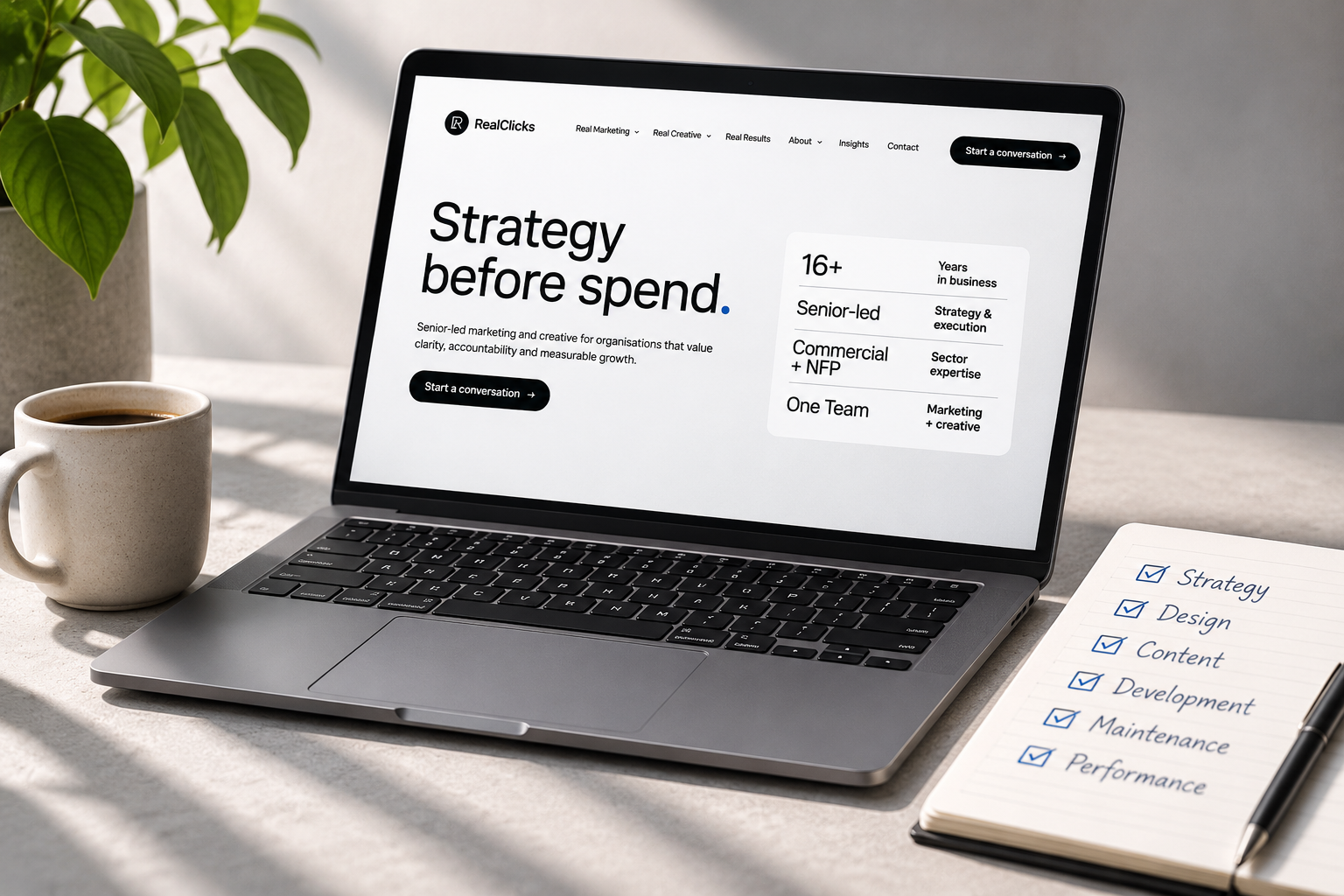
Two website quotes can list the same number of pages and describe very different jobs. One covers design and development using content you supply. The other includes strategy, copywriting, photography, videography and a build that can grow with the business. The lower quote looks like the saving until the missing work turns up later as extra fees, another supplier or your own team's time. The difference shows up in the timeline and the finished quality, not just the price.
The build is also only the first cost. Over five years you'll add services, run new campaigns, change staff and connect new tools. Those are normal business changes, not extras, and decisions made during the build decide what each one costs.
The cost of a website in Australia is driven by the original creative and content required, the level of customisation, technical integrations and how the business needs to manage and update it. A template site using existing assets and a custom site with new photography and integrations are different purchases, and either can be the right one.
So compare scope, not totals.
Check whether each quote includes copywriting, photography, videography, the creation or sourcing of visual assets, SEO setup, testing and post-launch support. If it doesn't, someone still has to do that work.
Over five years, budget for:
A fairer comparison than the build quote is: initial build + creative and content + five years of running costs + expected improvements + your team's time managing it.
When the savings are outweighed by the work the site creates later. A marketing team shouldn't need to raise a development request every time it wants to publish a campaign landing page. If it does, the website is already slowing down the business's ability to market itself. A platform that can't take an integration you need means custom work or a rebuild.
The highest cost rarely shows on an invoice. If the imagery undersells your work, the messaging doesn't explain the offer, or the enquiry form creates friction, you lose people your marketing has already paid to bring in. What Happens After the Click? looks at that gap in more detail.
One avoidable expense is rework. Agree on the photography, messaging and content requirements before design starts. Building layouts around placeholders and then trying to accommodate the finished material often means revisiting work that's already been approved.
Ask each agency for a breakdown of the creative, content and technical work. Then find out:
The right website is the one that's still practical to run, update and sell from in year five. Judge every quote against that, not the first invoice.
If you'd like a second opinion on a website design proposal, we're happy to look over the scope with you.
You need a new website when improving the current one would cost more than it returns. Better content, new imagery or a simpler enquiry process fixes many problems. Structural or platform limits are what usually justify a rebuild. Our article Does Your Website Need a Redesign? 7 Signs It May Be Time covers how to decide.
It depends on complexity and how ready your content is. A project with original photography, copywriting and custom functionality needs more coordination than a build using existing assets. Ask for a schedule that shows each production stage and when your team needs to give feedback or approvals.
Your business should control its domain, content and key accounts. Some platforms are subscription-based, so owning your content isn't the same as owning the software. Before signing, confirm access rights, licensing and what happens if you change providers.