INsights
Google has announced the biggest change to Search in more than 25 years.
For decades, search has followed a familiar pattern. A user types a query, Google displays a list of results, and the user clicks through to a website for more information.
That experience is rapidly changing.
Google is transforming Search into a conversational, AI-powered assistant capable of answering questions, comparing options, analysing images and documents, monitoring information over time, and even helping users complete tasks such as bookings and purchases.
For businesses, this represents one of the most significant shifts in digital marketing since the rise of mobile search.
The good news is that success in AI search does not require abandoning SEO or rebuilding your entire marketing strategy. Instead, it requires a stronger focus on trust, expertise, helpful content, and user experience.
Here’s what businesses need to know.
Google’s latest AI updates introduce a much more interactive search experience.
Users can now ask complex questions in natural language, upload images and files for analysis, continue conversations through follow-up questions, and receive detailed AI-generated responses without needing to visit multiple websites.
Google has also announced the rollout of AI agents. These agents can monitor information on a user’s behalf, notify them when something relevant changes, and help complete tasks such as comparing products, finding local services, or making bookings.
Rather than acting as a directory of websites, Search is evolving into a digital assistant that helps users find answers and take action.
This shift changes how businesses earn visibility online.
Traditionally, SEO focused on earning a high position within Google’s search results.
While rankings still matter, businesses now face a new challenge.
When AI provides an answer directly within Search, users may not need to click through to multiple websites to find information. Instead, Google’s AI evaluates a range of sources and determines which businesses, websites, and content are trustworthy enough to reference.
This means visibility is no longer determined solely by where you rank. AI-generated search results can sometimes recommend businesses that are not in the top organic positions, highlighting the growing importance of understanding why Google AI Overviews may choose competitors over your business.
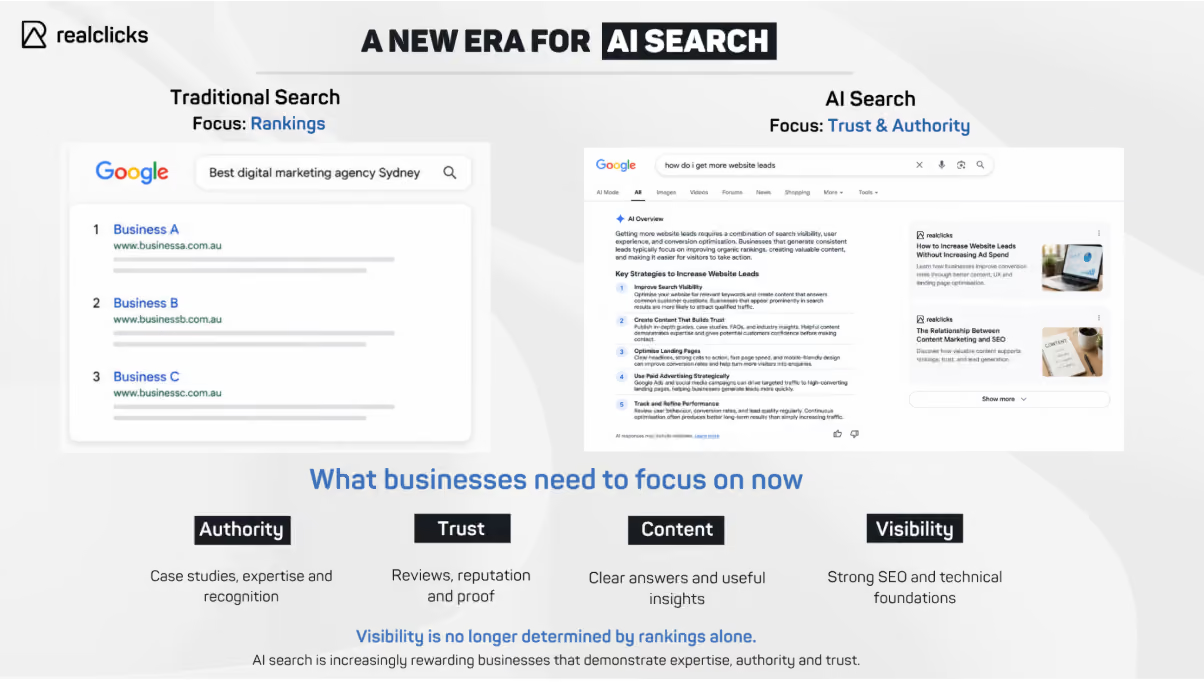
The goal is no longer simply to rank highly.
The goal is to become the source that Google’s AI chooses to cite, recommend, or reference when answering a user’s question.
Businesses that build authority and provide useful information will continue to benefit. Businesses that rely on generic content and outdated SEO tactics may find it harder to maintain visibility.
Building authority means demonstrating genuine expertise across your website and wider online presence. This can include publishing original insights, case studies, industry commentary, customer success stories, and content that answers real questions based on your experience. Earning positive reviews, being mentioned by reputable websites, maintaining an up-to-date Google Business Profile, showcasing team credentials, and providing evidence to support your claims can all strengthen trust signals.
The more Google and AI systems view your business as a credible source of information, the more likely you are to be referenced, cited, or recommended when users search for answers.
Absolutely.
Despite the rise of AI search, Google has been clear that the foundations of SEO remain critical. AI Overviews and AI-powered search experiences are still built upon Google’s existing search systems. Google’s AI relies on content that it can crawl, index, understand, and trust.
However, ranking highly is no longer the only goal. Businesses also need to focus on building authority, creating a strong user experience, and demonstrating trustworthiness across their digital presence. This shift reflects a broader reality that doing SEO alone is no longer enough to drive sustainable growth online.
In many ways, AI search reinforces the importance of good SEO. Technical performance, content quality, website structure, authority signals, and user experience all continue to play an important role.
The difference is that AI systems are becoming much better at identifying genuinely helpful content and filtering out content created purely to manipulate rankings.
Businesses that focus on helping users solve problems, answer questions, and make informed decisions are likely to be rewarded as AI search continues to evolve.
One of the biggest opportunities for businesses is creating content that directly addresses customer concerns.
AI search is designed around conversations. Users are increasingly asking complete questions rather than typing a few keywords.
Think about the questions your customers ask every day.
How much does it cost?
How long does it take?
What are the pros and cons?
Which option is best?
Is it suitable for my situation?
These questions often make excellent blog topics, FAQ pages, service page content, and video content.
Businesses that consistently provide clear and useful answers are more likely to be referenced within AI-generated responses.
Google’s recent updates continue to prioritise content that demonstrates experience, expertise, authoritativeness, and trustworthiness.
This means businesses should focus on creating content that reflects their real-world knowledge rather than publishing generic articles that could apply to anyone.
The most effective content often includes:
AI can generate generic information in seconds. What it cannot easily replicate is genuine experience and expertise.
This is where businesses can create a competitive advantage.
AI has dramatically lowered the barrier to creating content.
Articles, videos, FAQs and social posts can now be produced faster than ever before.
The challenge is that your competitors have access to the same tools.
As AI-generated content becomes more common, simply publishing more is unlikely to create a competitive advantage.
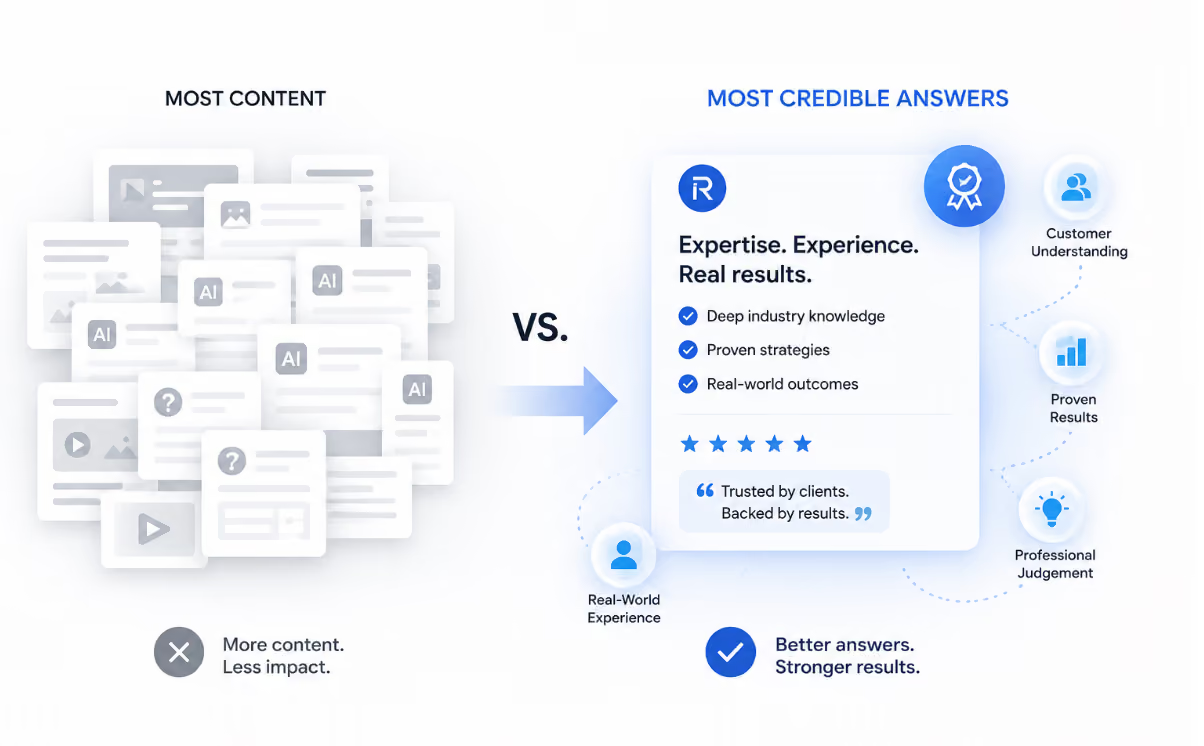
The businesses most likely to succeed will be those that combine AI with genuine expertise, customer understanding and real-world experience.
AI can help create content. It cannot replace years of industry knowledge, customer relationships, proven results or professional judgement.
The future of search is unlikely to reward businesses for creating the most content. It is more likely to reward businesses that provide the most credible answers.
Trust is becoming one of the most important factors in AI-driven search.
Google’s systems look beyond a single webpage when evaluating authority.
Businesses should ensure they have:
These signals help Google understand that your business is credible and deserving of visibility.
For local businesses in particular, maintaining an accurate and active Google Business Profile remains one of the highest-value actions you can take.
As AI becomes more sophisticated, some businesses assume technical SEO no longer matters. The opposite is true.
Google’s AI systems still need to discover, crawl, and understand your content.
Your website should remain:
A technically sound website gives both users and search engines a better experience, helping your content remain visible in both traditional and AI-powered search results.
Whenever major changes occur in search, new shortcuts and “secret strategies” quickly emerge.
Many businesses are already being sold AI optimisation services promising guaranteed visibility in AI-generated results.
Google’s guidance suggests a much simpler approach.
Businesses do not need special AI-only content.
They do not need to create hundreds of pages targeting every possible search variation.
They do not need to rewrite their content for robots.
Instead, they should focus on creating useful, trustworthy, people-first content.
The businesses that succeed in AI search will be the businesses that provide the best answers, not the businesses that find the latest loophole.
The rise of AI search is not the end of SEO.
It is the next stage in its evolution.
Search engines are becoming better at understanding intent, evaluating expertise, and identifying the most helpful sources of information.
Businesses that invest in quality content, demonstrate genuine expertise, maintain strong technical foundations, and build trust with their audience will continue to earn visibility.
The rules are changing, but the underlying principle remains the same.
The businesses that help people the most will be the businesses that get found.
As AI search continues to evolve, the focus should not be on chasing algorithms. It should be on becoming the kind of business that customers, and Google’s AI, would confidently recommend.